
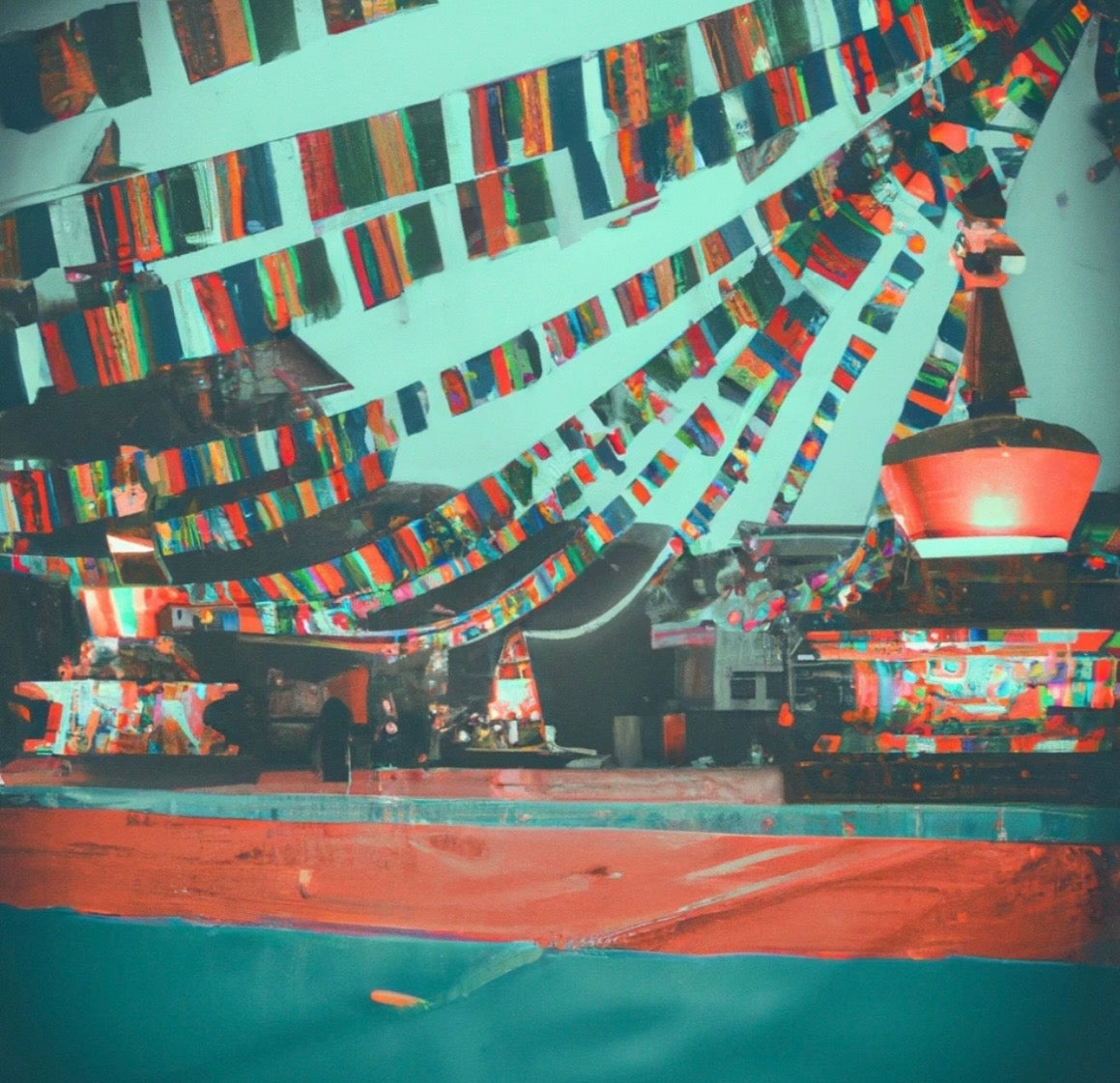
INNER LANDSCAPE, 2021
Inner Landscape is a series that delves into the nature of existence, memory, and the blurred boundaries between the real and the imagined. Through AI-generated depictions of geographical locations that may not exist physically but exist vividly in the recesses of personal memory, the series raises profound questions about what it means for a place to be tangible. If something can exist in one’s memory, can it also take form within the machine that powers artificial intelligence? Is this existence any less real, any less significant, than a physical, geographical place?
The work hinges on the concept of memory as both a personal and collective geography—a landscape created by the individual and shaped by the mind’s capacity to visualize and recall, even when those locations may not have ever been physically visited. In the case of AI, the machine generates landscapes born of data—patterns, algorithms, and inputs that might reflect or approximate human memories, but are not quite the same. This raises the central question of whether such landscapes, generated by artificial intelligence, can be said to “exist” in the same way as physical landscapes or even memories themselves.
The landscapes in this series exist as a strange hybrid—memories realized through technology. They occupy an intermediate space between reality and abstraction, inviting the viewer to contemplate the ontology of existence in an increasingly digital world. In some ways, the landscapes reflect the subjective nature of memory: as unreliable, mutable, and influenced by time, perception, and experience. The AI, functioning as an extension of the human mind, reproduces these landscapes—though they are not tied to physical coordinates. They represent places that exist only in the mind or perhaps in the ethereal space between human memory and machine learning.
By using AI as a medium to recreate these imagined or forgotten locations, Inner Landscape challenges our assumptions about what constitutes tangible reality. These places may never have existed in the physical world, but they still bear weight in the mind’s eye. If something can be visualized, felt, or experienced—even if only as a fleeting memory—does it not have a claim to existence, however tenuous? And if this experience can be replicated by AI, does it matter if the machine-generated representation is “real” or not? The tangibility of the memory is not diminished by its artificial reconstruction.
Drawing from philosophical ideas about existence—particularly those of phenomenology—the series explores the concept that perception itself constructs reality. Edmund Husserl and Maurice Merleau-Ponty would argue that reality is not simply an external object but a phenomenal experience shaped by the subject. In this sense, the AI-generated landscapes represent a further extension of that experiential reality—the places we know, have known, or have imagined manifesting in a new form through technology. The viewer is asked to confront whether the materiality of a landscape can be separated from its experience in the mind, whether imagined or real.
Moreover, the series invokes questions about identity and memory. In a world where digital spaces increasingly mediate our interactions with memory, knowledge, and existence, Inner Landscape examines the role of machines in recreating the past. It probes whether the AI—capable of mimicking human thought and memory—can truly grasp the subjectivity that underpins human experience. Can the machine reproduce the depths of human memory, with all of its distortions, projections, and projections, or is it only capable of a surface-level imitation? If AI can generate these landscapes, are they then less valid or more artificial than the memories we hold dear?
Ultimately, Inner Landscape poses a philosophical paradox: if a landscape exists only in the mind, and AI can replicate it, is it any less real than something that exists in the physical world? The series pushes the viewer to grapple with the intangible as tangible, and to reconsider the boundaries between imagination, memory, and reality in the age of artificial intelligence.