
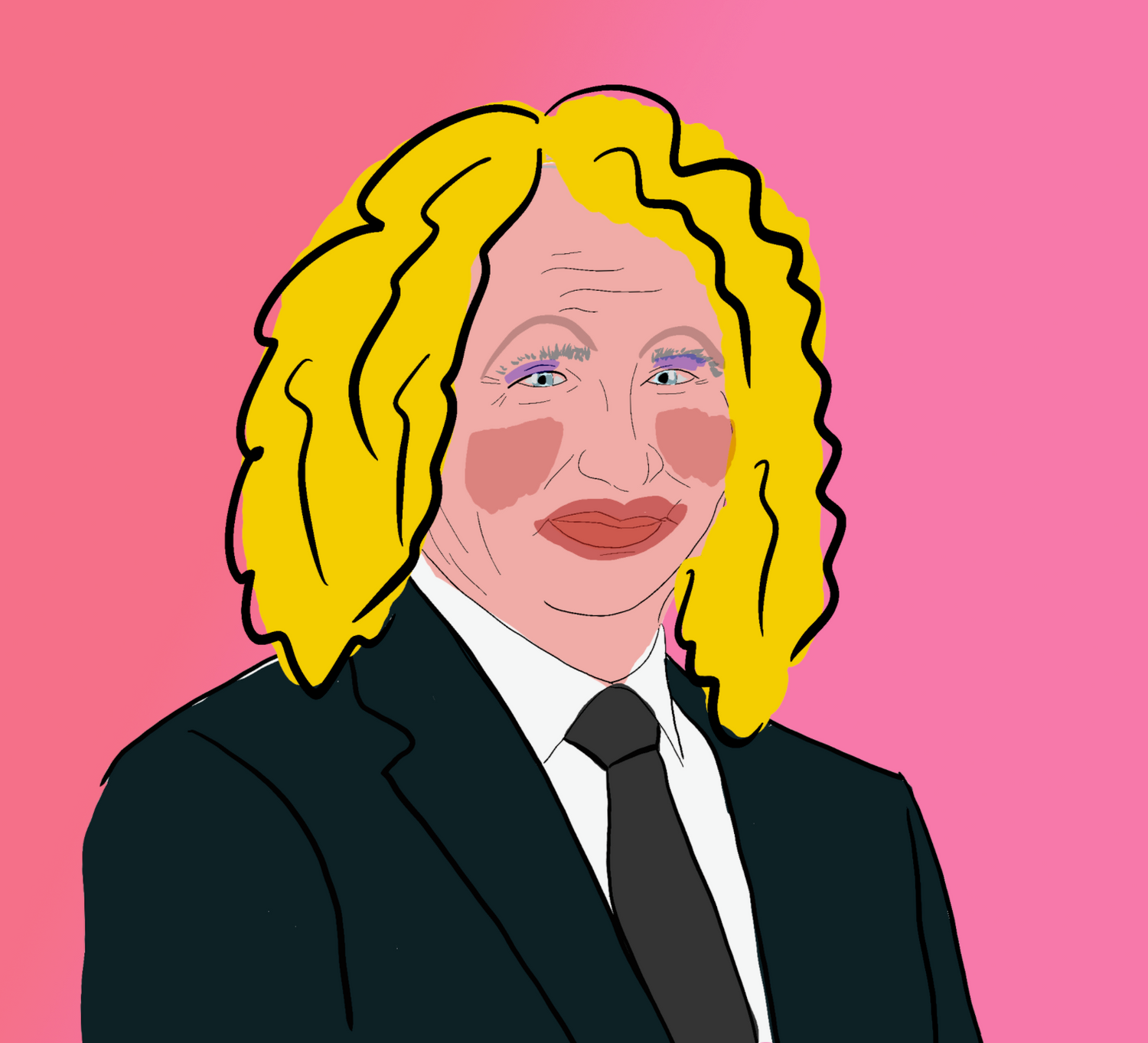
PRETTY PUTIN, 2022
Pretty Putin is a subversive series that confronts the performative nature of power, gender, and authoritarianism. Through portraits of Vladimir Putin in drag, the series seeks to provoke and challenge the very person it depicts, mocking both his obsession with image and the way that authority is often constructed through visual performance. In many ways, the work draws on Erving Goffman’s The Presentation of Self in Everyday Life, where he argues that our identities are not simply who we are, but rather performances crafted to meet the expectations of society.
In Goffman’s framework, the concept of “face-work” comes into play—the way individuals manage their public persona to convey a specific image to others, often to maintain power or control. Putin, who has carefully curated a public image as a strongman, a patriotic leader, and a symbol of Russian dominance, is here subjected to a radical inversion of those performances. By presenting him in drag, the series strips away the layers of calculated masculinity and power he so carefully presents, and exposes the theatricality beneath his authoritarian rule.
At its core, Pretty Putin examines identity as a performance. Putin’s obsession with control, both over Russia and his public persona, is critiqued through the lens of performance theory. In drag, Putin is not simply subverting his gender expression, but also revealing the fragility of his constructed authority. The portraits, in their exaggeration and satire, force us to recognize how much of his power is reliant on the crafted image of masculinity and virility, which is then contrasted with the playful, irreverent performance of drag.
Goffman’s concept of the “front stage” and “back stage” is also highly relevant here. On the “front stage,” Putin performs a carefully controlled, stoic figure—someone who embodies national strength and invulnerability. The drag portraits, however, place him on the “back stage,” where the artifice of his performance is laid bare. The fact that this back stage image is both humorous and unnerving highlights the artificiality of the performance itself. The vulnerability of this image—capturing Putin in drag, a traditionally subversive act—undermines the very idea of an infallible, domineering leader.
Additionally, the drag transformation calls into question the power dynamics tied to appearance. By taking a figure known for his authoritarian stance and placing him in the traditionally marginalized space of drag, the series forces a reconsideration of how power is often bound to superficial appearances. Just as drag subverts traditional gender roles, the portraits of Putin in drag invert the expectations of masculinity and authoritarianism. The absurdity of the image highlights the inherent fragility of the very authority Putin seeks to maintain.
Pretty Putin not only critiques the leader but also mocks the very performance of power that sustains his reign. The act of donning drag does not simply expose Putin’s obsession with his appearance, but also destabilizes the narrative of strong, unyielding leadership he has spent years constructing. By putting him in drag, the portraits act as a mirror to the performative aspects of his rule, mocking the fragility of the power structures he relies on.
Ultimately, Pretty Putin serves as both a personal critique and a political statement. Through Goffman’s lens, it becomes a critique of the performative aspects of power and masculinity, exposing how easily these roles can be subverted and distorted. In doing so, it not only challenges Putin’s self-image, but also questions the larger, global systems of authority that are maintained through carefully constructed and manipulated identities.