
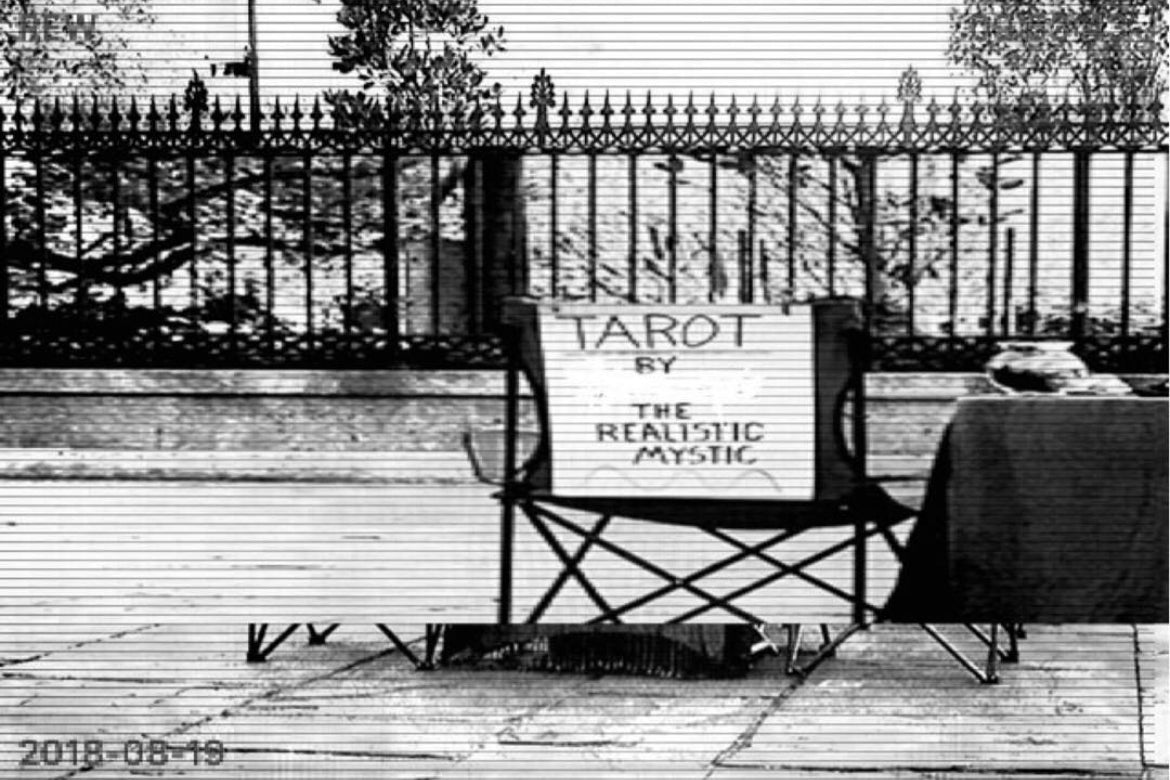
THE REALISTIC MYSTIC, 2019
The Realistic Mystic is a series that channels humor as an existential technology—an engine of survival, resistance, and revelation. Emerging from the psychological residue of post-crisis environments, the work transforms irony into its own kind of mysticism. The pieces function as fragmented prophecies, laughing as they unveil uncomfortable truths—about illusion, about resilience, and about the quiet absurdity that underpins modern life.
The conceptual seed of the series was planted in a post-Katrina encounter with a street vendor in New Orleans—an unlicensed prophet of sorts, who offered not goods or gimmicks, but absurd, brash one-liners and surreal insights to anyone willing to listen. He sold nothing tangible, only false hope with punchlines—a mystic in the ruins, wielding humor instead of scripture. That gesture, simple yet profound, haunted the work that followed.
Rather than delivering belief, The Realistic Mystic performs it. Its visual language is surreal, disjointed, almost ceremonial in its irreverence. Figures echo archetypes of wisdom, but they’re always off—mirthful, cracked, absurd. Truth here isn’t offered as dogma, but as performance. Each work reads like a joke that’s been told too many times, gaining power not in clarity but in repetition, distortion, and tonal imbalance. In this way, the mystical becomes not something sacred, but something slightly broken—held together by laughter and memory.
Nietzsche’s concept of the will to power pulses underneath the series—not as domination, but as creation in the face of collapse. The works suggest that when meaning disintegrates, the act of making something anyway—even if it’s only a joke—is a declaration of existence. It is mysticism without a god, survival without sentimentality. The images don’t console. They confront. Their humor is not a cushion but a weapon, aimed at the soft underbelly of belief itself.
If mysticism once promised transcendence, The Realistic Mystic offers instead a punchline—a reminder that the sacred and the stupid often share a face. And that, sometimes, the only way to resist despair is to smirk at it. There is no tidy redemption here, only fragments of vision refracted through a cracked lens, smiling.
The result is not nihilistic but liberating. A laughter that shakes off illusion. A mysticism that acknowledges it’s made up—and proceeds anyway. In this tension, the series finds its strange power. Like a joke that echoes long after it’s told, it lingers—not with clarity, but with a feeling. A flicker. A nod to something half-believed but deeply felt.