
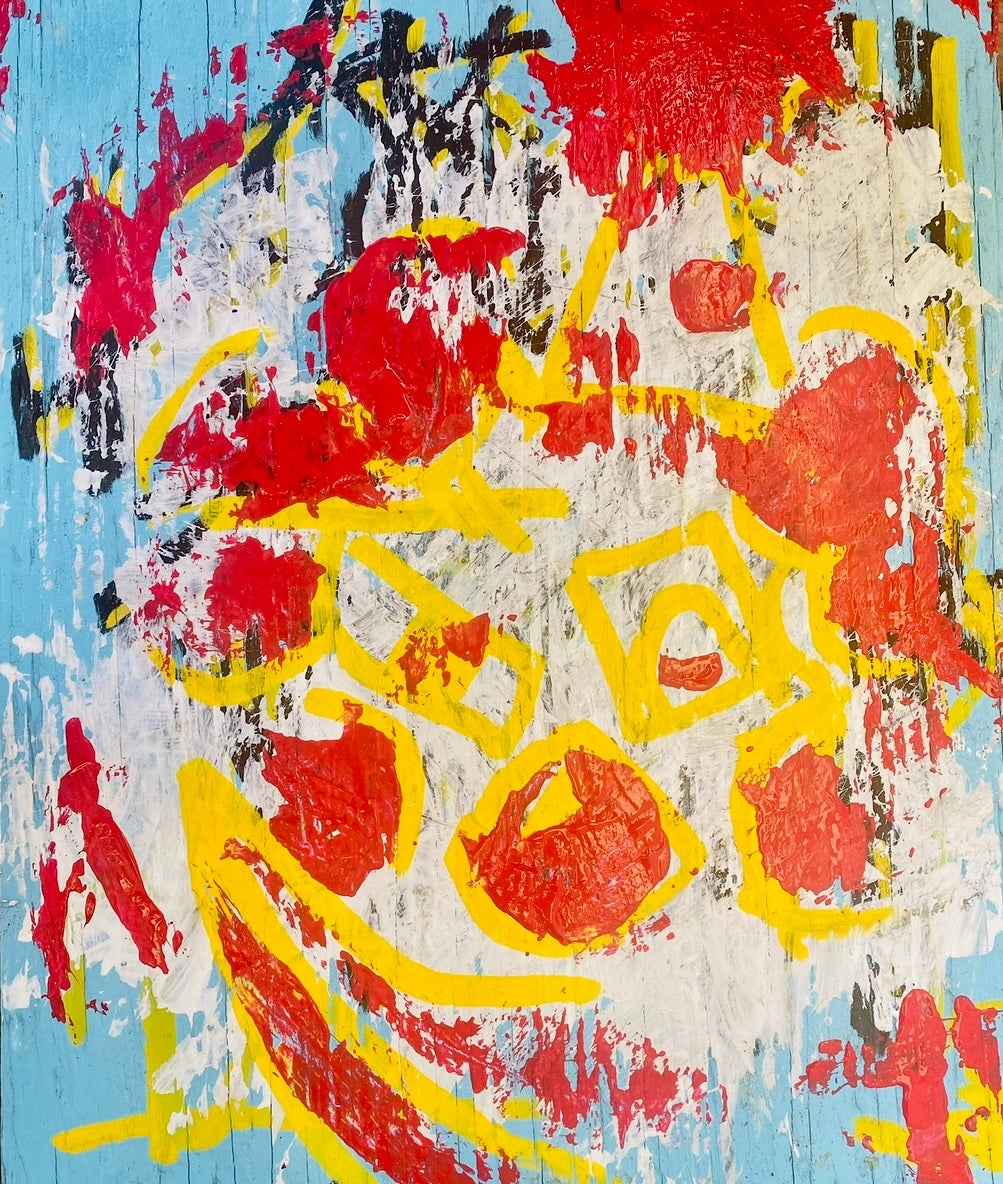
THE WHITEFACE, THE AUGUSTE AND THE CHARACTER, 2018
In this body of work, the clown is stripped of its innocence and studied as a mythic figure of distortion—equal parts absurd, authoritative, and historically loaded. Among the classic clown typologies—Whiteface, Auguste, and Character Clown—the Whiteface is the most polished, the most “pure.” Traditionally the leader of the clown hierarchy, the Whiteface directs and mocks, often playing the role of the straight man to the foolishness of the others. But beneath this polish is a performance of order that hides its own chaos.
Here, the Whiteface is rendered not as benign comic but as a cultural artifact of irony and racial tension. The very name—Whiteface—feels innocuous in the context of circus tradition, but takes on new meaning in the historical shadow of blackface. While the latter has been widely condemned for its overt racism and legacy of dehumanization, the Whiteface persists unquestioned—its whiteness seen as default, unmarked, innocent. This unmarked whiteness becomes its own kind of mask: one that hides the mechanisms of mockery, power, and control behind a painted smile.
By emphasizing exposure to children, the series raises questions about how laughter is taught—what is funny, and to whom? The clown’s antics seem universal, but historically, much of this humor is built on hierarchies: the smart over the foolish, the clean over the messy, the powerful over the marginalized. In many early performances, laughter came at the expense of bodies marked as “other”—and this tradition, though often abstracted today, still echoes in media, caricature, and popular comedy.
This series also uses the aesthetic language of clowning—bold color, exaggerated features, theatricality—to reflect on the unsettling overlaps between play and propaganda. Much like early blackface minstrelsy, the clown exists as a sanctioned figure of distortion: a performer allowed to mock, to lie, to exaggerate—often with impunity. What’s troubling is not simply the clown’s existence, but society’s eager acceptance of its absurdities, its encoded violences, and its embedded hierarchies as “just entertainment.”
In this context, the painted Whiteface becomes not just a character but a symptom. A symptom of the way innocence is constructed and maintained, how spectacle distracts from implication, and how humor is used as a tool to anesthetize moral discomfort. The work invites viewers to reconsider what we laugh at—and why. What’s been made safe through repetition? What’s been hidden in plain sight?
The series draws a throughline from circus tent to screen, from childhood to ideology, revealing that the clown—especially the Whiteface clown—is not merely a comic figure, but a cultural weapon disguised in laughter. The paradox here is haunting: what appears innocent is often the most complicit. What we call “funny” is often only palatable because we’ve forgotten its original cost.